
It’s cold. The nights are long. And your heating system is doing the heavy lifting day after day. So when the heat suddenly stops working, it’s more than an inconvenience. It gets uncomfortable fast. Before you panic or assume the worst, there are a few simple things you can check on your own. Sometimes the fix is straightforward. Other times, it’s a sign that your boiler needs professional attention.
Here’s how to tell the difference.
Step 1: Start with the Thermostat
It may sound obvious, but it’s always worth checking first.
Make sure your thermostat is:
- Set to “heat”
- Set to a temperature higher than the current room temperature
- Powered on and responsive
If your thermostat uses batteries, try replacing them. Weak batteries can cause inconsistent signals or prevent your system from turning on at all.
If the thermostat looks fine but nothing is happening, move on to the next step.
Step 2: Check Your Power Source
Boilers rely on electricity to run controls, pumps, and ignition systems. Head to your electrical panel and see if a breaker has tripped. If it has, reset it once and see if the system restarts. Also check for a nearby emergency shutoff switch, which is sometimes located at the top of basement stairs or near the boiler itself. These can be accidentally turned off.
If power is restored and the system still doesn’t respond, it may be a deeper issue.
Step 3: Take a Look at the Boiler Itself
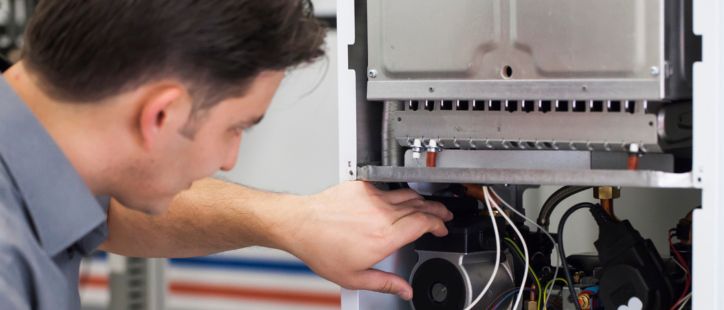
If you’re comfortable doing so, take a quick look at the unit. You’re not trying to fix anything here, just observe.
Check for:
- Error codes or flashing lights
- Unusual noises
- Leaks or moisture around the unit
- A lack of any activity at all
Some modern boilers will display a code that points to the issue. Even if you don’t know what it means, it can be helpful information if you need to call for service.
Step 4: Check the Water Pressure
Boilers rely on proper water pressure to circulate heat. If the pressure is too low, the system may not function correctly. Many boilers have a pressure gauge on the front. In most homes, you’re looking for something in the range of 12–15 PSI when the system is cold. If it’s significantly lower, that could be the reason you’re not getting heat. Low pressure can be caused by leaks, air in the system, or other mechanical issues.
Bleed Radiators (If You Have Them)
If your system uses radiators and some rooms feel cold while others are warm, trapped air could be the issue. Bleeding radiators releases that trapped air and helps restore proper heat distribution. If you’re not familiar with the process, it’s something a technician can handle quickly during a service visit.
Look for Frozen Pipes
In early February, freezing temperatures are always a possibility. If your system seems to be running but heat isn’t reaching parts of your home, frozen pipes could be blocking the flow of hot water.
You may notice:
- Cold spots in certain rooms
- Little or no heat coming from radiators or baseboards
- Unusual noises in the system
This is something to take seriously. Frozen pipes can lead to bursts if not addressed.
When It’s Time to Call a Boiler Professional
If you’ve gone through the basic checks and your system still isn’t working, it’s time to bring in the professionals at Maffei Services. Some issues require tools, experience, and training to diagnose safely.
Call for service if you notice:
- No heat at all after checking thermostat and power
- Repeated system shutdowns
- Low or fluctuating pressure
- Leaks around the boiler
- Strange banging or knocking noises
- Error codes you don’t recognize
- Uneven heating that doesn’t improve
Boilers are complex systems. Trying to push through a problem without addressing the cause can lead to bigger issues down the line.
Why Boiler Issues Shouldn’t Be Ignored
When a boiler stops working, it’s rarely random. Something caused it. Sometimes it’s a worn part. Sometimes it’s a buildup issue. Other times, it’s a sign the system hasn’t been serviced in a while. Ignoring it, or relying on temporary fixes, can lead to:
- Higher repair costs
- Reduced system efficiency
- Shorter equipment lifespan
- Unexpected breakdowns during the coldest days
Catching the issue early usually leads to a simpler solution.
Preventing Future No-Heat Situations
The best way to avoid a mid-winter breakdown is regular maintenance.
Annual boiler service helps:
- Catch worn parts early
- Keep the system running efficiently
- Reduce the chance of unexpected failure
- Extend the life of your equipment
It’s one of those things that’s easy to overlook until you need heat and it’s not there.
Get the Heat Back On
No heat in February isn’t something you want to deal with for long. If you’ve checked the basics and your system still isn’t working, it’s worth getting it looked at before the problem gets worse.
Maffei Services works with homeowners across Essex County, Massachusetts and Southern New Hampshire to diagnose and repair heating issues throughout the winter. Sometimes it’s a quick fix. Sometimes it’s something that needs a closer look. Either way, getting your heat back on and keeping it there is the priority.