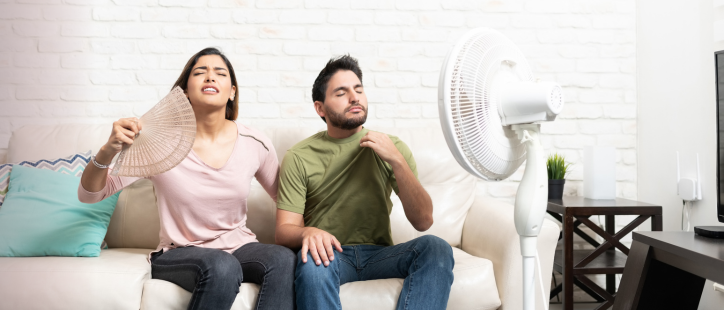
Your air conditioner is running. The thermostat says the house is 72 degrees. So why does it still feel uncomfortable?
If your home feels sticky, muggy, or damp even when the AC is operating, you’re not imagining it. In fact, this is one of the most common comfort complaints homeowners experience as spring transitions into summer.
The issue usually isn’t temperature. It’s humidity.
Across Northeast Massachusetts and Southern New Hampshire, rising humidity levels can make a home feel warmer than it actually is. And when humidity isn’t being controlled properly, even a perfectly functioning air conditioner may struggle to keep you comfortable.
Here’s why it happens and what you can do about it.
Temperature and Comfort Aren’t the Same Thing
Most people think comfort is all about temperature. But humidity plays a major role in how your home feels. When indoor humidity levels rise, moisture lingers in the air. That moisture makes it harder for your body to cool itself naturally through evaporation.
As a result:
- Rooms feel warmer than the thermostat reading
- Air feels heavy or damp
- You may find yourself constantly lowering the thermostat
- Comfort levels decrease even though the AC is running
That’s why a home at 72 degrees with high humidity can feel far less comfortable than a home at 75 degrees with proper humidity control.
Your Air Conditioner Does More Than Cool
Many homeowners don’t realize that air conditioners are designed to do two jobs:
- Cool the air
- Remove humidity
As warm air passes over the evaporator coil, moisture is pulled from the air and drained away. Under normal conditions, this process helps maintain comfortable humidity levels indoors. However, when something interferes with that process, your home can start to feel sticky even while temperatures remain relatively cool.
Your System May Be Short Cycling
One of the most common causes of humidity issues is short cycling. This happens when an air conditioner turns on, cools the space quickly, and shuts off before it has enough time to remove adequate moisture from the air. The temperature reaches the thermostat setting. The humidity does not.
Short cycling can occur for several reasons, including:
- An oversized air conditioning system
- Thermostat placement issues
- Equipment performance problems
Because the system isn’t running long enough, moisture remains in the air.
Dirty Air Filters Restrict Performance
Sometimes the solution is surprisingly simple. A clogged air filter restricts airflow throughout the system. Reduced airflow can affect how efficiently your air conditioner removes both heat and humidity from your home. This is one reason HVAC professionals recommend changing filters regularly throughout the cooling season.
A clean filter helps:
- Improve airflow
- Support proper cooling
- Enhance humidity removal
- Reduce strain on the system
It’s one of the easiest maintenance tasks homeowners can perform.
Spring Humidity Is Already Moving In
Many people associate humidity with July and August. But in New England, humidity often begins increasing well before summer officially arrives. Spring rain, melting snow, damp soil, and warmer temperatures all contribute to elevated moisture levels.
You may notice:
- Condensation on windows
- Damp basement conditions
- Sticky indoor air
- Increased allergy symptoms
As outdoor humidity rises, your HVAC system must work harder to maintain indoor comfort.
Airflow Problems Can Create Hot and Humid Areas
Not every room in the home receives airflow equally. Blocked vents, closed registers, furniture placement, or ductwork issues can create areas where air circulation is limited.
These rooms often feel:
- Warmer
- More humid
- Less comfortable
Even if the rest of the house feels fine. If one area consistently feels muggy while others don’t, airflow may be part of the problem.
Your Home May Need More Humidity Control
In some homes, the air conditioner alone isn’t enough. This is especially true during periods of prolonged humidity. A whole-home dehumidifier can work alongside your HVAC system to remove excess moisture throughout the house.
Benefits often include:
- Improved comfort
- Reduced sticky feeling
- Better indoor air quality
- Less strain on the AC system
- Lower likelihood of mold and mildew growth
Many homeowners are surprised by how much more comfortable their homes feel once humidity is properly managed.
Signs Humidity Is the Real Problem
Wondering whether humidity is causing your discomfort?
Look for these common clues:
- The house feels damp even at comfortable temperatures
- You constantly lower the thermostat but never feel comfortable
- Windows show condensation
- Musty odors develop
- Air feels heavy or stagnant
- Bedding feels slightly damp
- Hardwood floors expand or swell seasonally
These signs often point to excess moisture rather than inadequate cooling.
A Smart Thermostat Can Help
Newer smart thermostats do more than control temperature. Many models can also monitor indoor humidity levels. This gives homeowners a better understanding of what’s actually happening inside the home. Some systems can even make comfort adjustments based on humidity levels, helping maintain a more accurate “feels-like” temperature rather than relying on temperature alone. The result is often improved comfort and more efficient system operation.
Don’t Automatically Turn the Thermostat Lower
When a home feels sticky, the natural reaction is to lower the thermostat. Unfortunately, that often isn’t addressing the real issue. If humidity is the problem, lowering the temperature may increase energy usage without making the home feel significantly more comfortable. Instead, it’s important to identify why moisture levels remain elevated. Once the humidity issue is addressed, many homeowners find they can keep the thermostat slightly higher while feeling more comfortable.
Get Ahead of Summer Humidity
As May gives way to June, humidity levels throughout Northeast Massachusetts and Southern New Hampshire will only continue to rise. If your home already feels sticky, now is the time to investigate why.
Maffei Services helps homeowners improve comfort through HVAC maintenance, airflow evaluations, smart thermostat upgrades, ductless systems, and whole-home humidity control solutions. Because comfort isn’t just about temperature. It’s about creating an indoor environment that feels cool, dry, and comfortable no matter what the weather is doing outside.

